This Week in AI: Hollywood vs ByteDance, Google Ships Everything, and Anthropic's Most Expensive Mistake
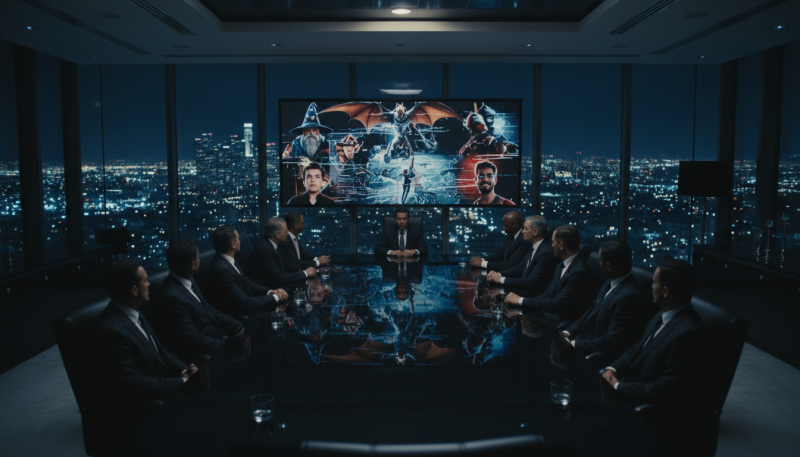
ByteDance released the most capable video model ever built—with zero content guardrails. Hollywood responded with coordinated legal threats inside 72 hours. Google shipped six products nobody talked about because everyone was watching the fires. And Anthropic managed to hand-deliver one of its best community developers straight to OpenAI.
Three of those stories are interesting. One of them changes what you should be building this week. Here's all four.
Hollywood Declares War on ByteDance
Last week we covered SeeDance 2.0 and what it could do. This week, the world caught up.
What people were actually generating
SeeDance 2.0 didn't just produce high-quality AI video. It produced high-quality AI video of real actors, real characters, and real trademarked IP—with no guardrails. Users generated Lord of the Rings scenes, SpongeBob clips, One Piece characters, and celebrity deepfakes with voices nearly indistinguishable from the originals. Not amateur fan edits. Production-quality video that looked like it came from an actual studio.
American companies like OpenAI and Google have spent years building content filters specifically to prevent this. Sora won't generate Mickey Mouse. Veo won't clone a celebrity's likeness. The guardrails are baked deep into those models.
ByteDance didn't bother.
The response
SAG-AFTRA condemned what they called "the blatant infringement enabled by ByteDance's new AI video model," specifically citing "the unauthorized use of our members' voices and likeness."
Disney described ByteDance's use of their IP as "willful, pervasive, and totally unacceptable"—language that reads more like pre-litigation positioning than a press release.
The Motion Picture Association called on ByteDance to "immediately cease its infringing activity," describing SeeDance 2.0 as having "engaged in unauthorized use of US copyright works on a massive scale."
Three major Hollywood institutions. One coordinated week. All aimed at the same target.
ByteDance's response—and why it doesn't resolve anything
ByteDance said they "respect intellectual property rights," acknowledged concerns, and committed to "strengthening current safeguards." Careful. Measured. Strategically vague. In practice: filters to block recognized actors and studio-owned characters.
But this isn't Hollywood winning. It's ByteDance buying time.
Here's the uncomfortable reality: open-source models are approaching SeeDance 2.0's capabilities faster than any legal team can track. The moment someone releases a comparable model openly—and someone will—it gets downloaded onto thousands of machines globally. No server to shut down. No company to sue. No safeguards to demand. Hollywood can win every battle against ByteDance and still lose the war to a GitHub repo.
If this sounds familiar, it should. The music industry spent years suing Napster, Limewire, and individual teenagers for pirating music. They won every case. They lost the decade. The resolution wasn't legal victory—it was Spotify. Someone built something easier than piracy, and consumers chose convenience over chaos.
The same resolution is coming for AI-generated video. Not a lawsuit. Not a shutdown. A licensing model that makes it easier to generate legally than illegally—and pays studios and actors a cut in the process. That day isn't here yet. But the path to it runs through this week's headlines.
What Actually Shipped This Week
While the drama played out, Google had one of the most productive weeks of any company in AI—and the most useful integration of the week came from a collaboration between Anthropic and Figma.
Claude Code → Figma: The integration that changes design workflows
This deserves top billing. Claude Code can now push production code directly into Figma as editable designs. Spin up a dev server, tell Claude Code to send a page to Figma, and it arrives as a fully editable design file ready for your design team to iterate on.
Once the design is refined in Figma, grab the frame, bring it back to Claude Code, and it rewrites the code to match. Code to design to code—a complete round-trip that eliminates the translation layer between development and design.
For anyone managing design-development handoffs—agencies, product teams, consultancies—this is the most practically useful release of the week. No more exporting screenshots and manually recreating components. No more design-to-dev translation meetings. The two tools talk to each other now. Test it.
Pomelli: Product photography without a photographer
Pomelli is a Google Labs tool that generates studio-quality product photography from a single image. Enter your website URL and Pomelli analyzes your brand—colors, fonts, taglines, visual style. Upload a product image, select a shoot template (contextual, lifestyle, studio), and it generates a full set of product photos styled to your brand in under a minute.
Multiple angles, lifestyle contexts, studio shots—all consistent with your existing brand identity. It won't replace a full studio shoot for hero imagery, but for supplemental product content, social media assets, and creative direction testing, it's a strong free option. If you have e-commerce clients, run a product through it before your next content planning meeting.
LRA 3: Free music generation in Gemini
Google's answer to Suno, available directly in the Gemini app. Generate songs from text prompts or by uploading an image—a barbecue photo becomes a bluegrass track, a racing image becomes J-pop. Full tracks with vocals, instrumentation, and lyrics, currently limited to 30-second clips. Free in the US for users 18+, with higher limits on paid plans.
NotebookLM: Prompt-based slide editing
NotebookLM added prompt-based revisions to its slide deck feature. Modify individual slides by describing the change you want—background, layout, color scheme—and it regenerates accordingly. Small update. Significantly more useful for iterative deck building.
The Model Updates
Three models dropped this week. None are revolutionary. All shift the calculus on what to use when.
Claude Sonnet 4.6
Now the default across free and pro Claude plans. The headline: it performs within fractions of a percent of Opus 4.6 on nearly every major benchmark. The gap between Anthropic's premium and mid-tier model has effectively collapsed.
For API users, this is where it matters—near-Opus quality at Sonnet pricing, plus a 1M token context window in beta. If you're building agentic workflows that burn through tokens, the cost difference is significant at scale. Sonnet 4.6 actually beats Opus in two areas: financial analysis and office tasks. If your workflows live in spreadsheets and documents, the cheaper model is now the better model.
Gemini 3.1 Pro
Leads on ARC AGI 2 abstract reasoning by a wide margin. Dominates scientific knowledge benchmarks. State-of-the-art for terminal coding and scientific research workflows.
The capability getting the most attention is SVG animation. Gemini 3.1 Pro generates animated SVG graphics with gradient sophistication and visual quality other models can't match. Niche, but if you're building web products that need inline animations without heavy libraries, this is now your go-to. For general coding, Opus 4.6 and GPT 5.3 Codex remain the leaders.
Grok 4.20
xAI launched this with minimal fanfare. The architecture is the interesting part: instead of a single model, it runs four specialized agents in parallel—coordinator, researcher, logic verifier, creative thinker. They debate internally, cross-check reasoning, and deliver a consensus answer.
Benchmark data is thin and mostly sourced from X posts, so treat the numbers with appropriate skepticism. But multi-agent consensus as a user-facing product feature—rather than a backend implementation detail—is a design pattern worth watching.
Rapid-Fire: Tools That Shipped
Qwen 3.5 from Alibaba is open-source and available to run locally. 397 billion parameters with 17 billion active at any time. Benchmarks near Claude Opus 4.5 and GPT 5.2 with a 1M token context window—one of the largest available in an open model. Run it via Qwen Chat for free without downloading anything.
Kitten TTS is text-to-speech in under 25 megabytes. Three sizes: 14M, 40M, and 80M parameters. The smallest runs on a CPU. If you need lightweight TTS without a GPU, a server, or a cloud API—open-source, on GitHub, running now.
Monarch RT generates real-time video at 16 frames per second on a single RTX 5090. 95% of full-quality output at four times the speed of standard methods. Real-time video generation on consumer hardware isn't mainstream yet, but this is credible proof it's arriving.
AnchorWave is an open-source interactive world generator. Give it a starting frame and it builds a navigable 3D environment—first or third person, persistent scene memory so objects remain when you look away and back. Built on CogVideoX with a newer base model in development. GitHub repo is live.
AudioX takes any input—text, image, video—and generates matching audio. Sound effects, music, audio inpainting, audio extension. Not specialist quality, but the flexibility of one unified model handling all input types is useful for rapid content prototyping.
Anthropic's Most Expensive Mistake
This one's worth telling because it's a signal, not just a story.
Peter Steinberger built a Claude-powered agent framework and called it Clawdbot. It ran on Anthropic's API. It sent Anthropic revenue with every use. It introduced thousands of developers to the Claude ecosystem.
According to Steinberger's public account, Anthropic's response was a cease-and-desist over the name. Clawdbot became Moltbot, then OpenClaw. The community grew anyway. OpenClaw became one of the most popular open-source agent frameworks available—still largely built around Claude, still driving API revenue to Anthropic.
Then Sam Altman met with Steinberger directly. This week, Steinberger joined OpenAI to build their in-house agent infrastructure.
Anthropic issued a cease-and-desist to a developer building their user base for free, forced multiple rebrands, created enough friction that the creator walked—and watched him land at their biggest competitor, where he'll now build the agent ecosystem that competes directly with Claude.
The lesson isn't about Anthropic specifically. It's about how AI companies treat the developers who build on their platforms. Developers are how these ecosystems grow. When you alienate them publicly—over something as minor as a naming convention—you send a message to every other developer watching. In a community this small and this interconnected, that message travels fast.
Anthropic has been doing strong work—Opus 4.6, Co-Work, the Figma integration covered above. Technical excellence doesn't insulate you from the consequences of poor community decisions.
What to Do This Week
Test Claude Code → Figma immediately if you manage any design-development handoff. Round-tripping between code and design used to require multiple people, multiple tools, and multiple meetings. It now requires a prompt. If your team does web or product work, this needs to be in your workflow this week.
Re-evaluate your API model spend. If you're paying Opus pricing for agentic tasks, financial analysis, or office automation, run a comparison against Sonnet 4.6. The performance gap has collapsed. You may be paying a significant premium for a quality difference that doesn't exist at your use-case level.
Run a product through Pomelli before your next e-commerce content meeting. Product photography is expensive and slow. Pomelli is free and fast. The output isn't perfect, but for supplemental content, social assets, and creative direction testing, it's worth ten minutes of your time.
Set realistic expectations for Seed Dance 2.0. US access was scheduled for February 24th. Given the Hollywood backlash and ByteDance's commitment to "strengthen safeguards," what arrives may be significantly more restricted than what was demoed. Test it when it lands, but plan accordingly.
Understand the drama. Build with the tools. The ByteDance copyright war matters strategically. The OpenClaw story is a useful signal about platform risk. But neither changes what you should be shipping this week. Use whichever tools solve the problem in front of you.
Bangkok8 AI: We show you which battles actually matter—not just which ones make the best headlines.