The Death of the Chatbot: Why Google’s Gemini 3 and ‘Antigravity’ Just Changed Your Business Model
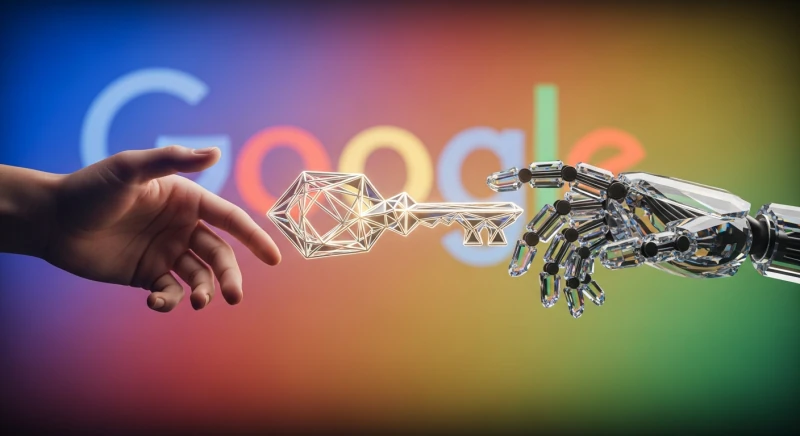
For the last three years, we have all been playing the same game. We type into a box, we wait a few seconds, and we get text back. We’ve optimized prompts, we’ve built RAG pipelines, and we’ve marveled at how well a machine can write a sonnet or debug Python code.
But as of this week, that era is officially a legacy mindset.
With the release of Gemini 3 and the unveiling of the Google Antigravity platform, the industry hasn't just moved the goalposts; it has changed the sport entirely. We are no longer building things that talk to customers. We are building things that work for them.
At Bangkok8 AI, we have been tracking the "agentic shift" for months, predicting a move toward autonomous workflows. Google just accelerated that timeline by about two years. Here is what happened, why it matters, and—most importantly—how you need to pivot your strategy to survive the Antigravity well.
The "Chat" Era is Over. The "Do" Era Has Begun.
The distinction between a chatbot and an agent is simple: one speaks, the other acts. Until now, businesses have primarily used AI as a retrieval tool—a very smart librarian. Google’s latest announcement signals the transition to AI as a workforce—a very fast intern.
Under the Hood: Gemini 3 and "Deep Think"
First, let’s look at the engine. Gemini 3 is Google’s new multimodal flagship, and while the benchmarks are impressive (shattering records in math and coding), the raw intelligence isn't the headline. The headline is "Deep Think" mode.
Unlike previous models that rushed to generate the first statistically probable token, Gemini 3 has been architected to pause. It engages in "adaptive reasoning," simulating a chain of thought to plan complex tasks before executing a single action.
Why does this matter for business? Because "hallucination" often stems from rushing. By forcing the model to "think" before it speaks, Google has drastically increased reliability for high-stakes enterprise tasks. You don't want an AI that guesses your Q4 financial forecast; you want one that calculates it.
The Real Disruption: Google Antigravity
If Gemini 3 is the engine, Antigravity is the highway system.
Until now, building "agents" (AI that can browse the web, use apps, and perform tasks) was a messy process involving third-party frameworks like LangChain or custom API spaghetti. Google Antigravity changes this by offering a native, first-party environment for Agentic AI that lives inside the Google ecosystem.
Antigravity allows developers to build agents that have "physics" within Google Workspace. These agents don't just read your emails; they have the permission structure and understanding to:
- Draft and send contracts in Docs.
- Update live inventory in Sheets.
- Schedule and facilitate meetings in Calendar.
- Negotiate with other agents.
This is the fulfillment of the "Active Partner" promise. It is the difference between an AI assistant that tells you how to book a flight, and an AI agent that books the flight, adds it to your calendar, and expenses the receipt to your accounting software.
The Bangkok8 Take: The "Walled Garden" Trap
This all sounds utopian for efficiency, but we need to talk about the strategic risk.
Google Antigravity is designed to be frictionless. It is incredibly easy to deploy. And that is exactly why it is dangerous. By building your company’s agentic infrastructure on Antigravity, you are weaving your business logic inextricably into Google’s proprietary fabric.
If your AI agents live in Antigravity, they live by Google’s rules. If Google changes the pricing, the API access, or the governance policies, your digital workforce is at their mercy.
Our advice? Adopt, but diversify. Use Gemini 3 for its reasoning capabilities. Use Antigravity for internal workflows that are already deep in Google Workspace. But for your core IP—your customer data, your proprietary algorithms, your "secret sauce"—maintain a layer of independence. Do not let the convenience of 2025 blind you to the platform risks of 2030.
What You Should Do Next
The tools have changed. The friction is gone. The only limit now is how much control you are willing to cede to the machine. To stay ahead, we recommend three immediate steps:
- Audit Your Workflows: Identify the repetitive processes in your company that require action, not just text. These are your candidates for Antigravity agents.
- Test "Deep Think": If you are using AI for data analysis or strategy, switch your API calls to Gemini 3’s reasoning mode immediately. The reduction in error rates is worth the latency.
- Watch the API Costs: Agentic AI is expensive. An agent that "thinks" and loops through tasks consumes significantly more compute than a chatbot. Monitor your token usage closely in these early weeks.
Stay tuned to Bangkok8 AI Insights for our upcoming tutorial on building your first Antigravity agent.